


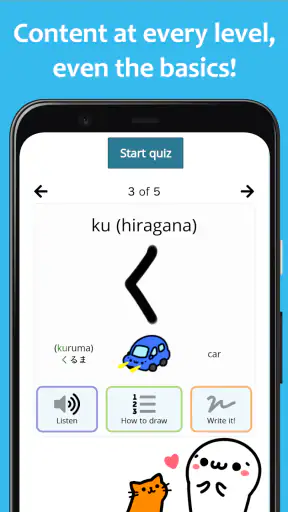
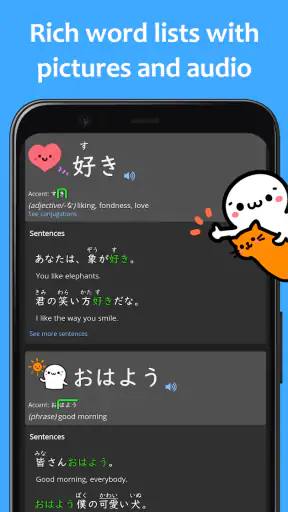

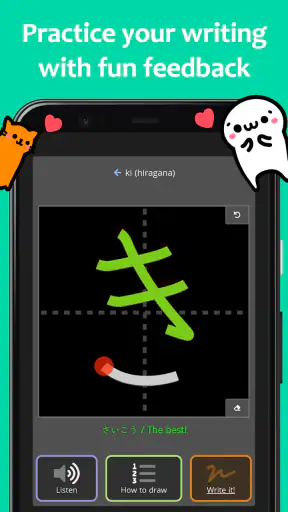
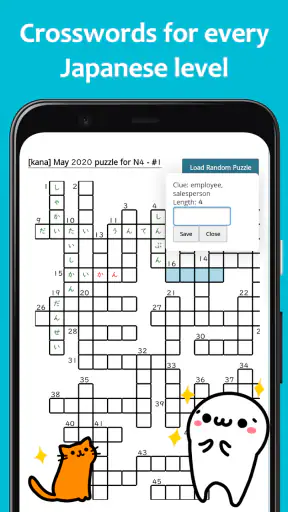
Learning Japanese often fails for a surprisingly ordinary reason: the material does not fit the learner’s actual day. A lesson may be useful, but if it takes too long, feels too rigid, or makes you review words you already know while ignoring the ones you keep forgetting, it becomes easy to abandon. I spent time with renshuu to see whether its central promise—building a personal route toward Japanese mastery—makes a practical difference rather than simply sounding appealing.
My overall impression is that this is a serious Japanese learning app presented in a friendly, low-pressure way. It is made by renshuu.org, belongs in the education category, and is available free of charge. The app is suitable for Everyone, works on Android from version 7.1 onward, and its current version is 1.2.20260311. Those details matter because this is not positioned as a short trial or a narrow vocabulary tool; it is something you can keep returning to as your Japanese changes.
The strongest part of the experience is personalization. Instead of forcing every learner through one identical course, renshuu helps turn Japanese study into a collection of manageable routines. That approach will not remove the need for effort, and it does not replace conversation practice, but it makes the daily decision of what to study much easier. I can open it with a small amount of time available and still feel that the session has a purpose.
A personal study path that changes the way review feels
The verified capability I kept noticing was the app’s personal path to learning. In practice, that means the value is not just in having Japanese material on a screen. The important question is how the app organizes that material around my progress and keeps review from becoming a completely manual chore.
Many alternatives in this category divide themselves into clear but separate jobs. A flashcard app may be excellent for memorization, a phrasebook may be convenient for travel, and a structured course may explain grammar in a sensible order. The weakness is that I often have to decide how these pieces fit together. Renshuu’s appeal is that it tries to make the learning route feel connected, so vocabulary, kanji, grammar, and broader practice do not have to exist as unrelated tasks in my head.
That distinction is especially useful for beginners. When I first approach Japanese, I do not necessarily know whether my next priority should be hiragana, common words, particles, or simple sentence patterns. A completely open-ended resource can give me freedom but also create decision fatigue. The personal-path idea reduces that friction by giving the session a direction while still leaving room for my own interests.
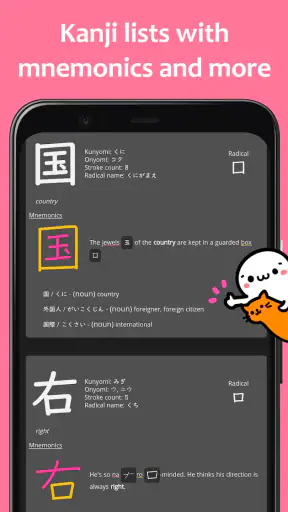
It also works for learners beyond the absolute beginner stage. Someone who already knows basic kana may not want to restart from the beginning, while someone returning after a long break may need a gentler review. A system that adapts the route is more useful than a fixed sequence when my knowledge is uneven. Japanese learners commonly recognize plenty of words but struggle with kanji, or understand grammar explanations but cannot recall everyday vocabulary quickly. A personalized review structure is well suited to those gaps.
The practical effect is consistency, not magic acceleration. I still need to think, recall, and make mistakes. What changes is the amount of energy spent choosing materials and tracking what deserves another look. That makes it easier to protect a small daily habit, which is often more valuable than an ambitious plan I follow only on weekends.
What a normal session feels like
I found the app most useful when I treated it as a study companion rather than a complete school. I would open it with one clear intention—reviewing words, strengthening kanji recognition, or continuing a learning path—and let the app guide the next steps. This prevented the common problem of spending the entire study period browsing resources without actually practicing.
The no-ad, no-paywall, and no-timer positioning also affects the mood of a session. I do not feel pushed to rush through an exercise simply because a countdown is running, and I am not interrupted by advertising. That is a meaningful advantage for learners who prefer calm repetition. It is also helpful when Japanese already feels demanding; the interface does not need to add another layer of pressure.
At the same time, a relaxed design can make it easier to postpone serious work. If I only tap through familiar material, I can leave the app feeling productive without confronting my weak points. The best results come when I use the personal route as a guide, then deliberately slow down on items I repeatedly miss instead of treating completion as the goal.
Why the organization matters for Japanese
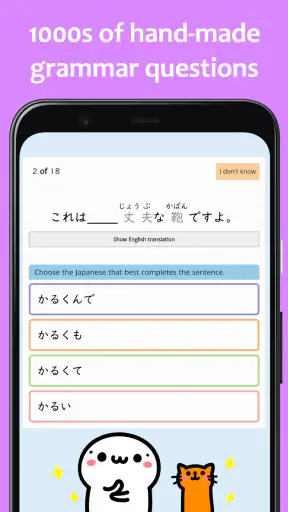
Japanese is not one single memorization problem. Reading, listening, grammar, kana, kanji, and vocabulary support one another, but they do not improve at exactly the same speed. A learner can recognize a spoken phrase and still fail to read it, or know a kanji in isolation but not understand it inside a sentence. This is where a broad learning app can be more useful than a narrow deck of cards.
Renshuu’s personal-path approach gives me a better framework for dealing with that unevenness. I can use it as a central place for regular study while accepting that certain goals may need additional tools. For example, a learner preparing for a trip may care more about practical phrases and reading signs than about carefully progressing through every level. A learner preparing for an exam may need more formal grammar work and timed practice elsewhere. The app’s strength is helping organize the foundation, not pretending every Japanese goal is identical.
A realistic everyday routine
Imagine a weekday morning before work. I have enough time for a focused session but not enough for a full textbook chapter. With renshuu, I can complete a contained review instead of asking myself which page to open or which deck to select. Later, during a break, I can return for a shorter check of the material that was less secure. The same routine works for a student between classes or a parent studying after the household becomes quiet.
The important detail is that the app fits around the day without making the learner build a complicated schedule first. That is a less obvious strength than simply saying it contains Japanese lessons. The path gives structure to fragmented time. A five-minute review may not feel dramatic, but repeated contact with Japanese is easier to maintain when each visit has a clear starting point.
I would not use this routine as an excuse to avoid longer study. Once or twice a week, I would pair the app with reading, listening, or a lesson that requires more concentration. Renshuu is particularly good at keeping the memory side of learning active; it is less sensible to expect short app sessions alone to develop natural conversation.
Useful habits that make the personal path stronger
My first tip is to resist changing direction every time a new topic looks interesting. The app is more valuable when I give its learning path enough continuity to reveal what I actually remember. Jumping constantly between unrelated material can feel fun, but it weakens the feedback loop that makes personalization worthwhile.
My second tip is to separate recognition from production in my own expectations. Recognizing a word when prompted is not the same as producing it in a sentence. When an item seems easy inside the app, I still try to say a short phrase aloud or write it from memory. This exposes a weakness that passive tapping can hide.
A third useful workflow is to connect app review with something outside the app. After studying a group of words or a grammar point, I can watch a short Japanese clip, read a simple passage, or label objects around me. The connection makes the material feel less isolated. Renshuu supplies the organized repetition; real Japanese supplies the messy context.
Where it compares well with familiar alternatives
Compared with a traditional textbook, renshuu is easier to use in brief sessions and better at keeping review in view. A textbook usually offers clearer long-form explanations and a more deliberate narrative, so I would still prefer one when I want a teacher-like progression through grammar. Renshuu wins when the problem is remembering what I studied last week.
Compared with a basic flashcard application, it feels more appropriate for learners who want Japanese content arranged into a wider path. A simple deck can be wonderfully focused and may suit someone who already has a carefully designed curriculum. The trade-off is that the learner must often supply more of the structure. Renshuu is the better starting point for me when I want guidance without assembling every component manually.
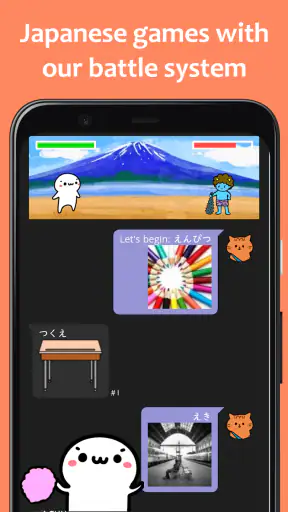
Compared with gamified language apps, the experience feels less dependent on pressure and streak-like urgency. That can make it more sustainable for an adult with an unpredictable schedule. On the other hand, people who need constant game mechanics to stay engaged may find the calmer approach less exciting. I would choose it for steady study, not for entertainment disguised as a lesson.
Costs, access, and the point where expectations change
The app is free to download and use, while in-app purchases range from $3.99 to $129.99 per item. I would begin with the free experience and decide only after understanding whether the learning path matches my habits. The wide purchase range means it is worth checking what a particular option adds before paying, especially if I am only looking for occasional vocabulary review.
The absence of ads, paywalls, and timers is a strong part of the free experience’s appeal. It means the basic study atmosphere does not constantly push me toward a purchase or interrupt the exercise. Still, “free” does not mean the app will meet every need without outside resources. Learners wanting detailed correction of their own writing or live speaking feedback should budget time for other methods as well.
Its broad device compatibility is another quiet advantage. Since it supports Android from 7.1, it can remain useful on older compatible phones rather than requiring the newest hardware. I would still pay attention to how comfortable the screen is for reading Japanese, because a small display can make kanji practice tiring even when the app itself runs properly.
Friction points I noticed
Personalization can be confusing at the beginning because it gives me choices instead of presenting one obvious road. A learner who wants a single linear course may need patience while deciding how to use the available path. My solution would be to choose one main direction first and postpone exploring everything else until the routine feels stable.
The app can also become too comfortable if I measure success by finished reviews rather than improved ability. Repetition is essential, but Japanese requires transfer: reading unfamiliar sentences, understanding speech at natural speed, and forming responses. Renshuu can support those goals, yet it cannot make the transfer happen automatically.
Another trade-off is breadth. Having a central learning environment is convenient, but learners who want a very specialized plan may prefer a dedicated resource. Someone focused exclusively on business Japanese, handwriting, or conversation correction may get better results from a tool built around that single purpose. I see renshuu as a flexible core, not a replacement for every specialist resource.
Who will benefit most
I would recommend it most strongly to beginners who want structure without the intensity of a formal class, returning learners who need to rebuild a routine, and intermediate students whose vocabulary or kanji knowledge has become disorganized. It is also a good fit for people who study in short, irregular windows and want the app to help decide what deserves attention next.
The public response supports that impression: renshuu has a 4.9 average from around 15 thousand ratings, with roughly 1.4 thousand written reviews and over a million installs. Those figures do not prove that every learner will enjoy it, but they do suggest that the personal approach has connected with a substantial audience.
I would be more cautious about recommending it to someone who wants a teacher to correct every sentence, a live partner for conversation, or a tightly scripted exam course. I would also hesitate if the learner dislikes reviewing older material and only wants new lessons. The app’s value depends on accepting that progress includes returning to things that feel familiar but are not yet automatic.
For families, the Everyone age rating makes it broadly accessible, although a younger learner may still benefit from an adult helping choose a sensible path and explaining why review matters. For independent adult learners, the main requirement is self-direction: the app reduces planning friction, but I still have to decide what Japanese ability I want to build outside the screen.
My recommendation after using it
Renshuu is at its best when I use its personal learning path as the dependable center of a wider Japanese routine. It makes daily review easier to start, gives scattered knowledge more organization, and avoids the advertising and countdown pressure that can make study feel like a chore. Its strongest contribution is not a flashy individual exercise; it is the way it turns repeated practice into something I can fit into ordinary life.
I would install it first if I were beginning Japanese today, particularly because the free entry point lets me test the study style without committing money immediately. I would then add listening, reading, and speaking practice as my goals became clearer. That combination respects what the app does well while avoiding unrealistic expectations.
After its release on Aug 23, 2020, it has grown into a well-established education app, and the current 1.2.20260311 version shows that it remains actively presented as a current learning option. My honest verdict is simple: choose renshuu if your biggest obstacle is maintaining an organized Japanese habit. Skip it if you need one specialized skill, live instruction, or a completely linear course. For everyone in between, it is a thoughtful and unusually practical place to build momentum.


